
Reviewed by
Dr. Pooja Ghorpade
MD (Obstetrics & Gynecology) | IVF Consultant
Specialized IVF Training – National University Hospital (NUH), Singapore
19+ Years of Experience in Women’s Health & Fertility Care
Quick Answer:
An unsuccessful IVF cycle does not always mean pregnancy is impossible. IVF success depends on several factors, including age, egg quality, sperm quality, embryo development, uterine health, and implantation. In many cases, identifying the possible reason for a failed cycle and making appropriate changes can improve the chances of success in future treatment.
At Orchid IVF Center, Kolhapur, every IVF cycle is carefully evaluated to understand what may have influenced the outcome and to develop a personalized treatment plan for the next step.
Understanding IVF Success
One of the biggest misconceptions about IVF is that it guarantees pregnancy.
While IVF is one of the most effective fertility treatments available today, no fertility treatment can guarantee success in every cycle.
The chances of success depend on several biological and medical factors that are unique to each couple.
It’s important to remember that one unsuccessful IVF cycle does not mean future attempts will also fail.
Many couples achieve a healthy pregnancy after modifying their treatment plan or addressing underlying fertility issues.
Is IVF Failure Common?
Yes.
An unsuccessful IVF cycle is emotionally difficult, but it is not uncommon.
Success rates vary depending on factors such as:
- Female age
- Egg quality
- Sperm quality
- Embryo quality
- Cause of infertility
- Overall reproductive health
For this reason, fertility specialists evaluate every cycle individually rather than relying on one single factor.
What Happens During an IVF Cycle?
Understanding the IVF process can help explain where challenges may occur.
An IVF cycle typically involves:
- Ovarian stimulation
- Egg retrieval
- Fertilization of the eggs
- Embryo development
- Embryo transfer
- Implantation inside the uterus
A problem at any of these stages may affect the final outcome.
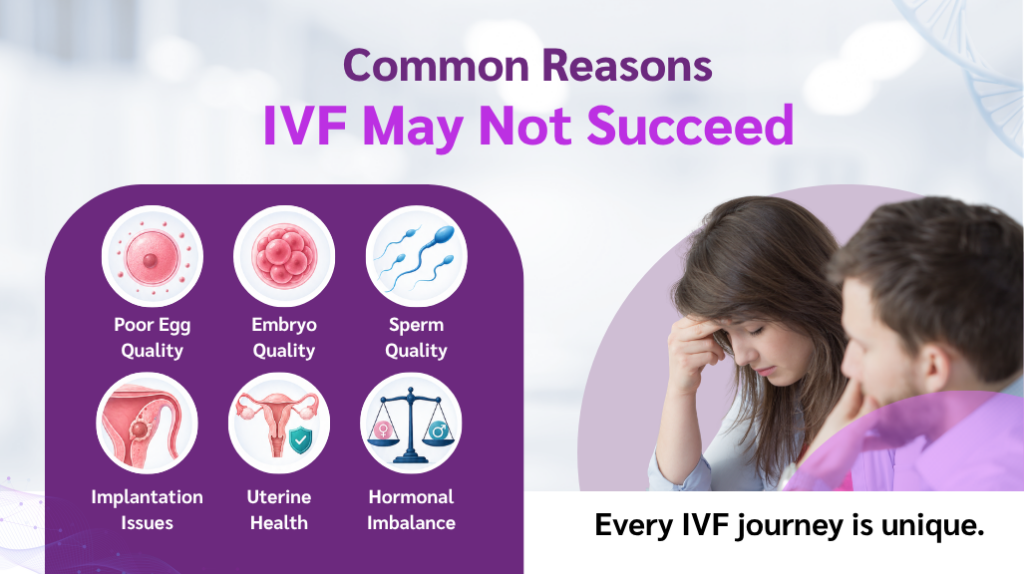
Common Reasons Why IVF May Not Be Successful
1. Egg Quality
Egg quality is one of the most important factors affecting IVF success.
As women grow older, egg quality naturally declines.
Poor egg quality may lead to:
- Difficulty with fertilization
- Poor embryo development
- Chromosomal abnormalities
- Lower implantation rates
Even when several eggs are retrieved, not all eggs are capable of developing into healthy embryos.
2. Embryo Quality
A good-quality embryo has a better chance of implanting successfully.
Embryo quality depends on both:
- Egg quality
- Sperm quality
Sometimes embryos stop developing before reaching the stage suitable for transfer.
In other cases, embryos may appear healthy but still carry chromosomal abnormalities that prevent implantation.
3. Sperm Quality
A normal semen analysis does not always tell the complete story.
Hidden sperm-related issues may include:
- DNA fragmentation
- Reduced fertilization potential
- Genetic abnormalities
These factors can influence embryo development and IVF outcomes.
4. Implantation Failure
One of the most frustrating situations is when a healthy embryo is transferred but pregnancy does not occur.
This is called implantation failure.
Successful implantation depends on:
- A healthy embryo
- A receptive uterine lining
- Proper hormonal support
- Good blood supply to the uterus
If implantation does not occur, the IVF cycle will not result in pregnancy.
5. Uterine Factors
The uterus plays an essential role in supporting implantation.
Conditions that may reduce implantation success include:
- Uterine polyps
- Fibroids affecting the uterine cavity
- Scar tissue (Asherman’s syndrome)
- Congenital uterine abnormalities
- Chronic endometrial inflammation
These conditions may sometimes require treatment before another IVF attempt.
6. Hormonal Imbalances
Hormones help prepare the uterus for implantation.
Problems involving:
- Thyroid hormones
- Progesterone
- Prolactin
- Insulin resistance
may interfere with embryo implantation or early pregnancy.
Careful hormonal evaluation before treatment can improve outcomes.
7. Endometriosis
Endometriosis can affect fertility in several ways.
It may influence:
- Egg quality
- Embryo quality
- Pelvic inflammation
- Implantation
The severity of endometriosis varies from person to person, and treatment is individualized.
8. Lifestyle Factors
Certain lifestyle habits can also influence IVF success.
These include:
- Smoking
- Excessive alcohol consumption
- Obesity
- Poor nutrition
- Chronic stress
- Inadequate sleep
Although lifestyle changes cannot solve every fertility issue, improving overall health may positively influence treatment outcomes.
Why One Failed IVF Cycle Doesn't Mean the Next One Will Fail
One IVF cycle provides valuable information about how your body responds to treatment.
After reviewing the cycle, your fertility specialist may adjust:
- Medication protocols
- Timing of egg retrieval
- Fertilization techniques
- Embryo transfer timing
- Hormonal support
- Additional investigations if required
These adjustments can improve the chances of success in future cycles.
IVF Failure: Factors You Can and Cannot Control
| Factors You Can Improve | Factors You Cannot Change |
|---|---|
| Healthy lifestyle | Age |
| Weight management | Genetic factors |
| Nutrition | Previous ovarian reserve |
| Smoking cessation | Certain congenital conditions |
| Following medication schedule | Natural egg ageing |
| Managing medical conditions | Some chromosomal abnormalities |
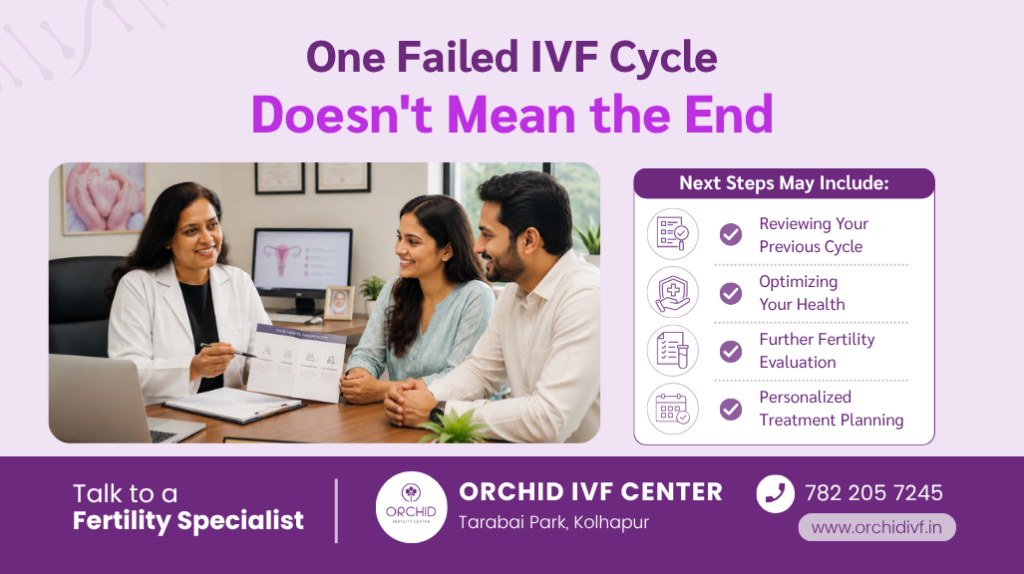
What Can Be Done Before Your Next IVF Cycle?
If an IVF cycle has not been successful, the next step is not always to repeat the exact same treatment. Instead, your fertility specialist will review every stage of the previous cycle to identify opportunities for improvement.
At Orchid IVF Center, every unsuccessful IVF cycle is carefully analyzed to understand what worked well and what may need to change before the next attempt.
Your doctor may recommend one or more of the following:
Reviewing the Stimulation Protocol
Every woman responds differently to fertility medications.
If the ovaries produced fewer eggs than expected or responded too strongly, your medication dosage or protocol may be adjusted in the next cycle to optimize egg development.
Re-evaluating Egg and Sperm Quality
If embryo quality was lower than expected, additional investigations may be recommended.
These may include:
- Advanced sperm function testing
- Hormonal evaluation
- Ovarian reserve assessment
- Review of previous embryo development
Understanding these factors can help guide future treatment decisions.
Assessing Uterine Health
A healthy uterus is essential for successful implantation.
If implantation did not occur, your fertility specialist may evaluate the uterine cavity for conditions such as:
- Polyps
- Fibroids
- Scar tissue
- Chronic endometrial inflammation
Treating these conditions before another IVF cycle may improve the chances of pregnancy in selected cases.
Optimizing Overall Health
Improving general health before another IVF cycle may positively influence treatment outcomes.
Recommendations often include:
- Maintaining a healthy body weight
- Eating a balanced diet
- Regular physical activity
- Good sleep hygiene
- Stress management
- Taking prescribed supplements only under medical advice
These measures support overall reproductive health but should not replace medical treatment where needed.
If you’ve experienced repeated pregnancy loss, our Recurrent Miscarriage Clinic may help identify possible causes.
Can IVF Success Be Improved?
There is no guaranteed way to make IVF successful, but several factors may improve the chances of achieving pregnancy.
These include:
- Starting treatment at the appropriate time
- Following your doctor’s instructions carefully
- Managing chronic medical conditions
- Attending all monitoring appointments
- Maintaining a healthy lifestyle
- Individualizing the IVF treatment protocol
According to Dr. Pooja Ghorpade, personalized treatment planning is one of the most important aspects of modern fertility care. Every couple has unique fertility challenges, and treatment should be tailored accordingly rather than following a one-size-fits-all approach.
Should You Try IVF Again After One Failed Cycle?
For many couples, yes.
One unsuccessful IVF cycle does not necessarily predict the outcome of future cycles.
In fact, information gained from the first cycle often helps fertility specialists make better-informed decisions for subsequent treatment.
Your doctor will consider:
- Your age
- The number of eggs retrieved
- Fertilization rates
- Embryo quality
- Implantation outcome
- Overall reproductive health
before recommending the next step.
Some couples may benefit from another IVF cycle, while others may require additional investigations or modifications to the treatment plan.
Learn more about our IVF Treatment in Kolhapur to understand how personalized treatment plans are created.
When Should You Seek a Second Opinion?
A second opinion may be helpful if:
- You have experienced repeated unsuccessful IVF cycles.
- The cause of IVF failure remains unclear.
- You would like to explore alternative treatment options.
- Your fertility circumstances have changed since your previous treatment.
A fresh evaluation may identify factors that were previously overlooked or suggest a different treatment strategy.
Myth vs Fact
| Myth | Fact |
|---|---|
| IVF guarantees pregnancy. | IVF improves the chances of pregnancy but cannot guarantee success. |
| A failed IVF cycle means you can never become pregnant. | Many couples achieve pregnancy in later IVF cycles or after treatment adjustments. |
| More eggs always mean better IVF success. | Egg quality is often more important than the number of eggs retrieved. |
| IVF failure is always because of the woman. | Fertility depends on both partners. Male factors contribute to many infertility cases. |
| After one failed IVF cycle, repeating treatment is pointless. | Each IVF cycle provides valuable information that can help improve future treatment planning. |
🔍 People Also Ask
Why does IVF fail even with good embryos?
Even when embryos appear healthy, successful pregnancy also depends on implantation, uterine health, hormonal balance, and several biological factors that cannot always be predicted.
How common is IVF failure?
An unsuccessful IVF cycle is not uncommon. Success rates vary according to age, fertility diagnosis, embryo quality, and other individual factors.
Can I get pregnant after a failed IVF cycle?
Yes. Many couples achieve pregnancy after reviewing the previous cycle, addressing underlying issues, and modifying the treatment plan where appropriate.
How long should I wait before trying IVF again?
The timing varies depending on your health, recovery, and your doctor's recommendations. Your fertility specialist will advise you on the most appropriate interval before beginning another cycle.
Can stress cause IVF to fail?
Stress alone is not considered a direct cause of IVF failure. However, managing stress and maintaining overall well-being can support you throughout fertility treatment.
✓ Key Takeaways
- ✔ One unsuccessful IVF cycle does not mean future treatment will fail.
- ✔ IVF success depends on multiple factors, including egg quality, sperm quality, embryo development, uterine health, and implantation.
- ✔ A careful review of the previous IVF cycle can help identify opportunities to improve future treatment.
- ✔ Lifestyle optimization, individualized treatment protocols, and appropriate medical evaluation may improve the chances of success.
- ✔ Every fertility journey is unique, and treatment should always be personalized.
Frequently Asked Questions About IVF
Have more questions? Visit our Fertility FAQ page.
About Orchid IVF Center, Kolhapur
Facing an unsuccessful IVF cycle can be emotionally challenging, but it is important to remember that one outcome does not define your entire fertility journey.
At Orchid IVF Center, Kolhapur, we take a personalized approach to fertility care. Every IVF cycle is carefully reviewed to understand what happened and to develop the most appropriate plan for future treatment.
Dr. Pooja Ghorpade
MD (Obstetrics & Gynecology) | IVF Consultant
- Specialized IVF Training at National University Hospital (NUH), Singapore
- 19+ Years of Experience in Women’s Health & Fertility Care
Contact Orchid IVF Center
202, Second Floor, Eternity Square, Opp. RTO Office, Tarabai Park, Kolhapur