

When couples face difficulty conceiving, male factors contribute to a significant number of infertility cases. Many men are unaware that certain everyday habits can affect sperm count, sperm motility, and overall reproductive health.
Understanding male fertility health involves looking at lifestyle choices, nutrition, physical activity, smoking, alcohol intake, sleep patterns, and environmental exposures.
This guide explains the most common habits affecting male fertility, how they influence sperm quality, and the lifestyle changes that may support better reproductive health.
What Are Habits Affecting Male Fertility?
Habits affecting male fertility are daily behaviors that may negatively influence:
- Sperm count
- Sperm motility (movement)
- Sperm morphology (shape)
- Hormone levels
- Testicular function
- Overall reproductive health
Some habits have a direct effect on sperm production, while others contribute through hormonal imbalance, oxidative stress, or metabolic changes.
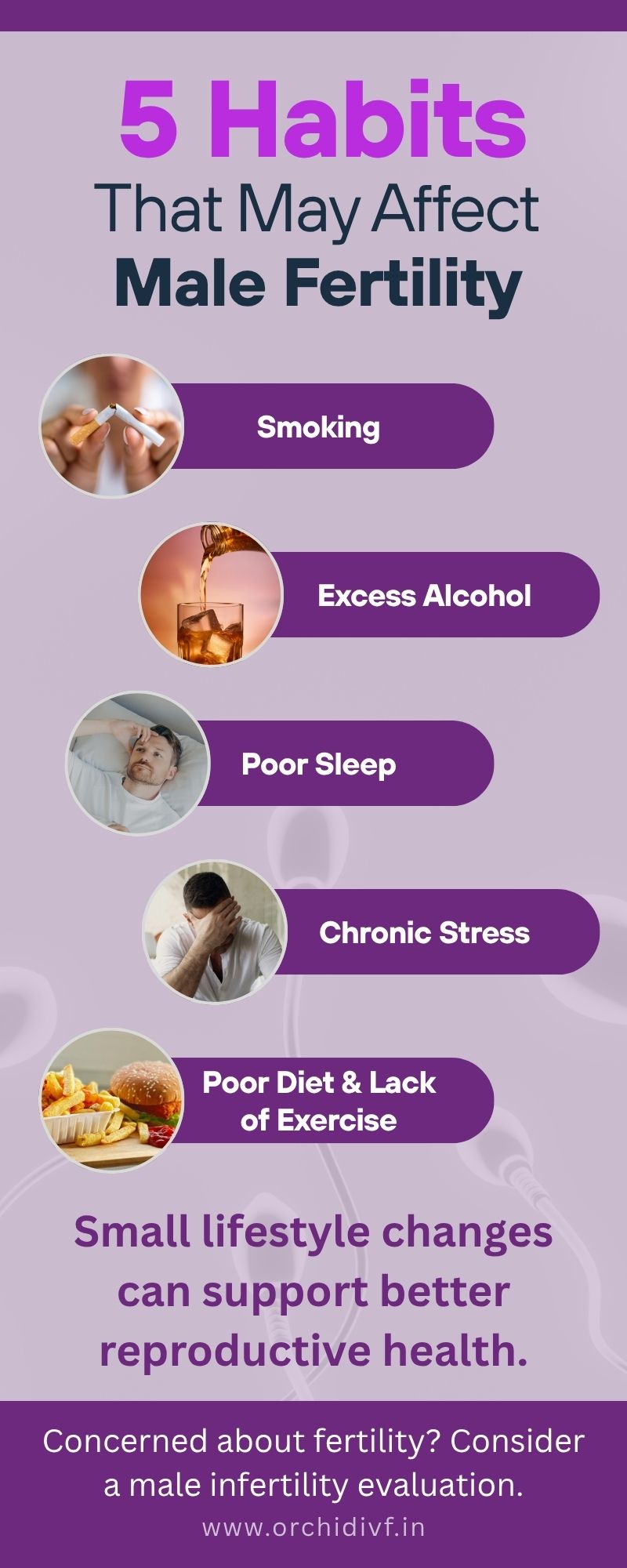
The 5 Most Common Habits That May Affect Male Fertility
1. Smoking
One of the strongest lifestyle factors linked to reduced sperm quality.
2. Excessive Alcohol Consumption
May disrupt testosterone production and sperm development.
3. Obesity & Poor Diet
Associated with hormonal imbalance and reduced fertility.
4. Physical Inactivity
Can contribute to poor metabolic and reproductive health.
5 . Poor Sleep & Chronic Stress
May affect hormone regulation involved in sperm production.
Comparison Table: Habits Affecting Male Fertility
| Habit | Possible Effect on Sperm |
|---|---|
| Smoking | Reduced count and motility |
| Heavy alcohol use | Hormonal disruption |
| Obesity | Lower testosterone levels |
| Sedentary lifestyle | Poor metabolic health |
| Sleep deprivation | Hormonal imbalance |
| High stress | Reduced reproductive hormone function |
What Daily Habits Negatively Impact Sperm Quality?
Daily habits that may negatively impact sperm quality include:
- Smoking cigarettes
- Vaping or nicotine use
- Excessive alcohol consumption
- Eating highly processed foods
- Consuming excess sugary beverages
- Long periods of sitting
- Chronic sleep deprivation
- Frequent exposure to high heat (hot tubs, saunas, prolonged laptop use on the lap)
- Unmanaged stress
How Does Smoking Affect Male Reproductive Health?
How smoking affects male reproductive health
Smoking is one of the most researched habits affecting male fertility.
It may lead to:
- Lower sperm count
- Reduced sperm motility
- Increased DNA damage in sperm
- Higher oxidative stress
- Reduced testosterone levels in some men
- Increased risk of infertility
Stopping smoking can be an important step in improving male fertility health.
Benefits of Exercise for Sperm Count
Benefits of exercise for sperm count may include:
- Improved blood circulation
- Better weight management
- Improved insulin sensitivity
- Healthier testosterone levels
- Reduced inflammation
- Better overall reproductive health
Recommended activities:
- Brisk walking
- Cycling (moderately)
- Swimming
- Strength training
- Yoga and stretching
Extremely intense overtraining may have the opposite effect in some individuals, so balance is important.
What Lifestyle Changes Should Men Make to Enhance Fertility According to Recent Studies?
Current fertility research generally supports:
- Quitting smoking
- Limiting alcohol intake
- Maintaining a healthy BMI
- Following a nutrient-rich diet
- Exercising regularly
- Sleeping 7-8 hours per night
- Managing stress
- Reducing exposure to excessive heat and environmental toxins
What Daily Habits Negatively Impact Male Fertility and What Products Can Help Improve It?
| Nutrient | Food Sources |
|---|---|
| Zinc | Pumpkin seeds, seafood |
| Selenium | Brazil nuts, fish |
| Vitamin C | Citrus fruits, berries |
| Vitamin E | Nuts, seeds |
| Omega-3 fatty acids | Fatty fish, flaxseeds |
| CoQ10 | Used under medical guidance |
Supplements should be taken only after discussing them with a fertility specialist.
Comparison Table: Fertility-Friendly vs Fertility-Harming Habits
| Fertility-Harming Habit | Fertility-Friendly Habit |
|---|---|
| Smoking | Tobacco cessation |
| Excess alcohol | Moderate or no alcohol |
| Fast food-heavy diet | Whole-food diet |
| Physical inactivity | Regular exercise |
| Sleeping less than 6 hours | 7–8 hours of sleep |
| Chronic stress | Relaxation and stress management |
Who Should Consider a Male Fertility Evaluation?
Men should consider evaluation if:
- Pregnancy has not occurred after 12 months of trying
- They have a history of smoking or heavy alcohol use
- They have obesity or metabolic disorders
- They have undergone previous reproductive surgery
- They have known hormonal problems
- They have a history of undescended testes or testicular injury
Step-by-Step Male Fertility Assessment at Orchid IVF Kolhapur
1.Detailed medical history
Lifestyle, smoking, alcohol, medications.
2.Physical examination
General and reproductive health assessment.
3.Semen analysis
Count, motility, and morphology evaluation.
4.Hormonal testing
If indicated.
5.Lifestyle assessment
Diet, exercise, sleep, and stress review.
6.Personalized fertility plan
Based on individual findings.
Cost Factors for Male Fertility Evaluation
| Service | May Affect Cost |
|---|---|
| Consultation | Specialist experience |
| Semen analysis | Basic vs advanced testing |
| Hormonal profile | Number of tests ordered |
| Ultrasound (if required) | Clinical findings |
| Nutrition / Lifestyle counseling | Personalized support services |
Timeline: How Long Do Lifestyle Changes Take to Affect Sperm Health?
| Time After Changes | What May Improve |
|---|---|
| 2–4 weeks | Energy and sleep quality |
| 1–2 months | Metabolic health markers |
| 2–3 months | Sperm production cycle effects may become visible |
| 3–6 months | Further improvements in overall reproductive health |
Patient Journey: Example Case Study
Mr. R, 32 years
Illustrative example
Concerns
Smoking, sedentary lifestyle, and abnormal semen analysis.
Changes Made
Stopped smoking, began regular walking and strength training, improved diet, and reduced alcohol intake.
Follow-Up
Repeat evaluation after several months showed improved overall reproductive health indicators.
People Also Ask
What daily habits negatively impact sperm quality?
Smoking, excessive alcohol, poor diet, physical inactivity, poor sleep, and chronic stress are among the most common factors.
How does smoking affect male reproductive health?
Smoking may reduce sperm count and motility, increase oxidative stress, and contribute to DNA damage in sperm.
What lifestyle changes should men make to enhance fertility according to recent studies?
Quit smoking, limit alcohol, maintain a healthy weight, exercise regularly, sleep adequately, and manage stress.
What daily habits negatively impact male fertility and what products can help improve it?
Smoking, excessive alcohol, poor diet, and inactivity may negatively affect fertility. Nutrients such as zinc, selenium, omega-3s, and antioxidants may support sperm health under medical guidance.
What are the benefits of exercise for sperm count?
Regular moderate exercise can support weight management, improve circulation, and help maintain healthy hormone levels.
Frequently Asked Questions About Fertility
Conclusion: Improve Male Fertility Health Through Better Habits
Habits affecting male fertility often develop gradually and may go unnoticed until couples begin trying to conceive. Smoking, excessive alcohol, poor diet, inactivity, inadequate sleep, and chronic stress are among the most important modifiable factors.
By making evidence-based lifestyle changes, men can support male fertility health and overall reproductive wellness. Early evaluation and personalized guidance can help identify risk factors and create a practical fertility improvement plan.
At Orchid IVF Kolhapur, we provide comprehensive male fertility assessment and individualized recommendations to help couples move forward with confidence.
For Male Fertility Evaluation in Kolhapur
Contact Orchid IVF Center
202, Second Floor, Eternity Square, Opp. RTO Office, Tarabai Park, Kolhapur
Dr. Pooja Ghorpade
MD (Obstetrics & Gynecology) | IVF Consultant
Specialized IVF Training – National University Hospital (NUH), Singapore
19+ Years of Experience in Women’s Health & Fertility Care